

Therapeutic Areas - Acute Hepatic Porphyria (AHP)
The material below is provided to support scientific exchange. Any content about investigational therapeutics or investigational uses of FDA-approved products does not establish the safety or efficacy of these therapeutics or uses, and there is no guarantee of FDA approval. Alnylam does not recommend or suggest use of its products in any manner inconsistent with the approved Prescribing Information.
Acute Hepatic Porphyria (AHP)
Image

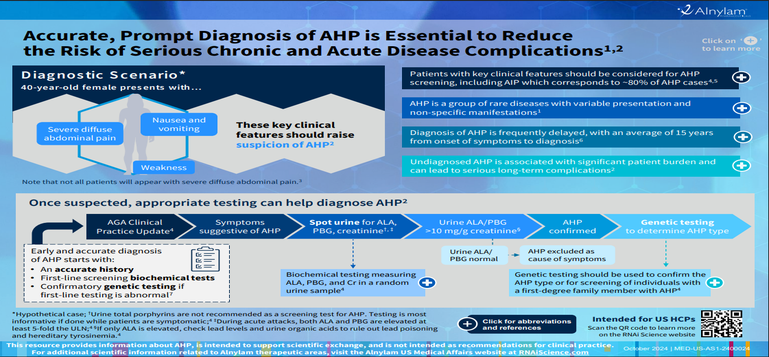
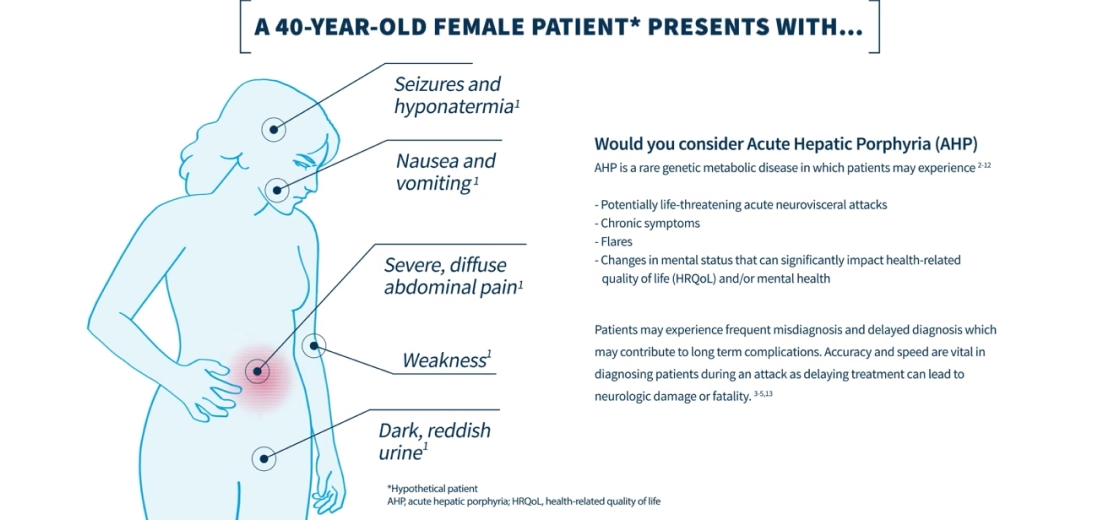
Acute Hepatic Porphyria (AHP) is a group of rare genetic diseases caused by heme biosynthesis dysregulation in the liver, leading to accumulation of neurotoxic intermediates such as aminolevulinic acid (ALA) and porphobilinogen (PBG). AHP presents with acute, potentially life-threatening attacks, and may also cause chronic symptoms that negatively impact patient functioning and quality of life.1,2
Resources


Link
Porphyria Burden Assessment Tool
The porphyria burden assessment (PBA) is a digitally accessible patient questionnaire intended to capture patients’ lived experiences of acute hepatic porphyria (AHP), focused on the chronic symptom burden associated with the condition and the impact of AHP on daily life.
References:
- Moghe A, Dickey A, Erwin A, et al. Mol Genet Metab. 2023;140(3):107670.
- Simon A, Pompilus F, Querbes W, et al. Patient. 2018;11(5):527-537.